THE STROKES:
Lacan and the Art of Making Sense of a Changing World
By: Pigeon Magazine - Maria Victoria Centeno
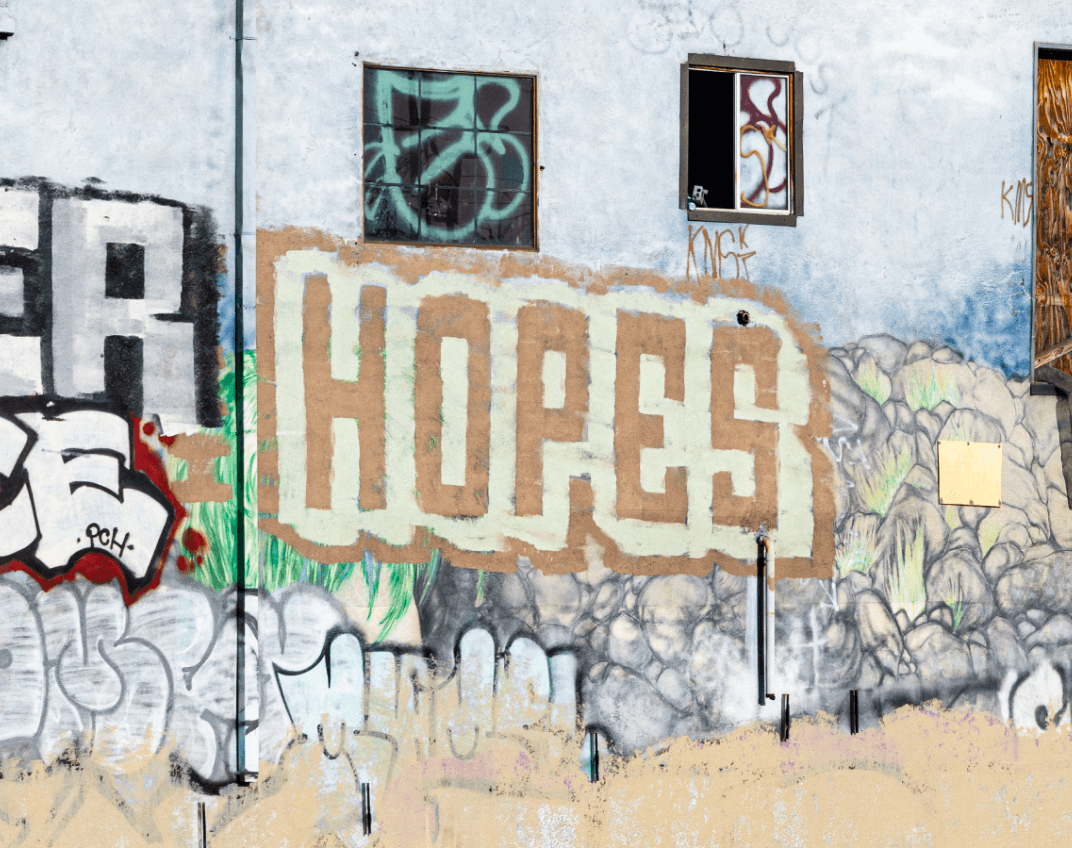
Hero image from "The Strokes: Reality Awaits"
Photos by Maria Victoria Centeno
I can’t remember when I first heard The Strokes. I think it was sometime in my early teens, when I’d come home from school and discover a new music video on MTV.
I should make it clear that they’re not my favourite band (if such a thing even exists), but they are a band I absolutely love, and one I seem to love more with every passing year. From here on, what follows is entirely subjective: my thoughts, opinions and observations, put down in writing from my own personal point of view. “This is not the truth, it’s just a story I tell to you”.
In April 2026, The Strokes announced their seventh studio album, Reality Awaits, and released Going Shopping, the first single. Since then, I haven’t been able to stop listening to them. I listen to the new stuff, go back to their early songs and find myself reminiscing about the good old days. It’s as if I’ve heard this album before and, at the same time, every song is new, full of layers that reveal more with each listen: sounds, lyrics and, why not, a little more autotune.
Listening turned into an obsession, and that obsession led me to see them live on Tuesday, 20th October, at the Palau Sant Jordi in Barcelona. The show was incredible: 22 songs spanning their entire discography over two hours, a sea of fans in ecstasy, throwing themselves into the mosh pits, singing along in unison and sharing that kind of joy that’s hard to explain. Albert Hammond Jr. made his white Stratocaster roar with almost academic precision, while Fabrizio Moretti and Nikolai Fraiture held down an impeccable rhythm section. Nick Valensi’s guitar parts, played by Steve Schiltz, were so precise that, at times, you could almost forget Nick wasn’t there.
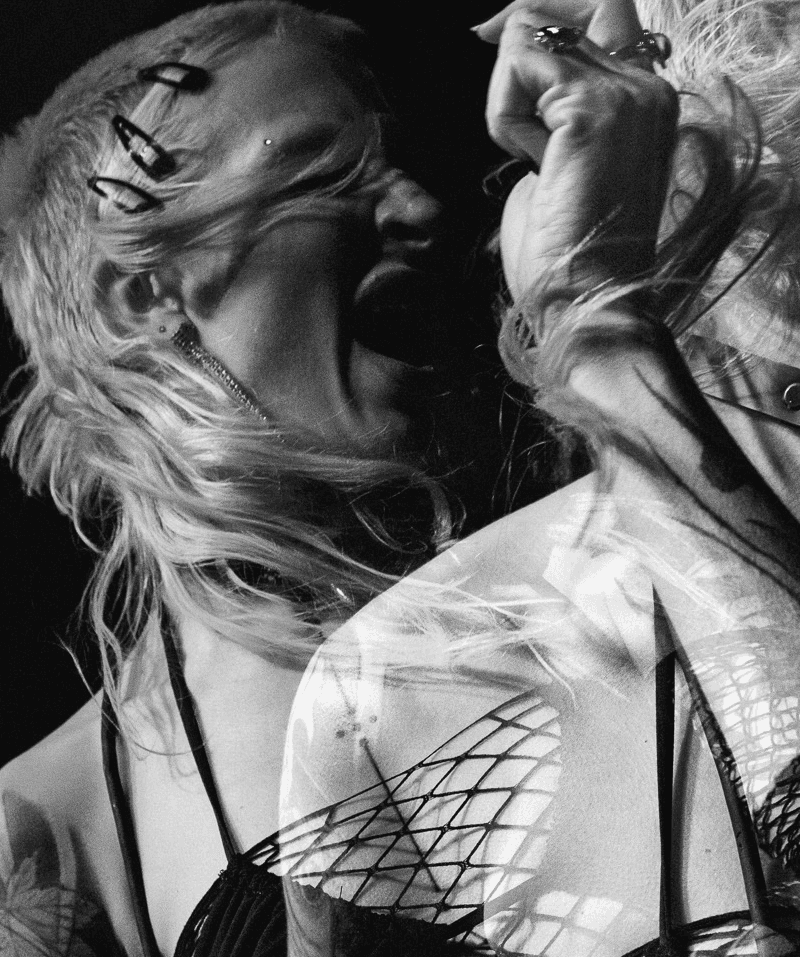
I also loved the lighting. The musicians remained almost entirely in the dark while screens projected overlapping images, out of sync with one another. But this isn’t a concert review. There’s something I’m much more interested in than what happened on stage.
From the moment I first listened to Reality Awaits, I had the feeling that The Strokes’ discography had always been in tune with the major shifts of their time. This may be as true as it is false. Life is a constant process of change, and the only certainty is that nothing remains the same. But we all know that some changes are more significant than others. To understand what I mean, all we need to do is look at when their albums came out.

Is This It was released in 2001, first in Australia and other markets, while its US release arrived in October, after 9/11. The album brought back the sound of earlier decades in a world dominated by nu metal, pop and hip-hop. Its songs painted a picture of a gritty New York of nightclubs, homeless people and prostitution, in stark contrast to other portrayals of the city, which offered a more fashionable, cosmopolitan and aspirational New York State of Mind.
Although the album had been conceived before 9/11, it became a cultural artefact whose reception was forever shaped by the attacks. Its nostalgic, retro sound resonates with the dawn of a new millennium, an era of booming global markets and politicians growing increasingly detached from the people they were supposed to represent. It’s an album caught between two decades and two millennia. Nothing more, nothing less.
The irony is that none of the band members was exactly an outsider. Quite the opposite: they were all privileged kids from well-to-do families who had attended elite private schools. And, of course, there’s Julian Casablancas, the band’s frontman, vocalist and lyricist, son of John Casablancas, founder of the modelling empire Elite Model Management.
Does coming from a privileged background mean you can’t be rebellious, grow bored with your own world or get angry at the reality you inhabit? I don’t know. It is what it is. Take it or leave it.
In 2003, they released Room on Fire, followed by First Impressions of Earth in 2006. Two brilliant albums packed with killer tracks like Reptilia and You Only Live Once: sweet yet frenetic guitars, anxious, icy loops brimming with frustration, ambiguity and uncertainty, sometimes becoming almost suffocating.
Then came a period that, at least for me, felt much more optimistic. Arctic Monkeys burst onto the scene with a garage rock sound that, despite its own darker undertones, seemed to bring a different kind of energy. Indie was making its way into the mainstream just as my own adolescence was beginning to take shape.
Between 2007 and 2011, I went through what, personally, was a particularly bright period in my life, despite some personal setbacks. The early days of social media, friends, hanging out, going out dancing for the first time, not having a care in the world... But nothing lasts forever.

And The Strokes had something to say about that changing era, too. In March 2011, they released Angles. MTV had given way to YouTube, and the five New Yorkers were now adults with very different views on life. The result was a less cohesive album, as though the identity that had once held them together was beginning to crack.
2012 was an incredible year for me, while 2013 was an exceptional year for music. And although I didn’t know it at the time, some of the albums released that year would end up soundtracking a very particular chapter of my life.
Having just turned 21, I was lucky enough to experience three albums that, despite being worlds apart, ended up defining much of my musical life that year: Daft Punk’s Random Access Memories, featuring the smash hit Instant Crush, with Julian Casablancas on vocals; Arctic Monkeys’ AM; and The Strokes’ overlooked and underrated Comedown Machine.
Daft Punk made me want to dance, Arctic Monkeys captured that playful, seductive spirit of being young, and The Strokes hit me right in the melancholy. Of course they did. Looking back, I think these three albums have far more in common than you might expect.
Am I making this all about myself? Maybe. But I can’t see any other way of getting to the heart of my argument. Perhaps music allows us to sense something about an era before we can put it into words. And this brings me to an idea I find particularly compelling.
In his text on Marguerite Duras, Jacques Lacan suggests that artists can be one step ahead of psychoanalysts: they can reveal something that psychoanalysis has yet to recognise. It’s not necessarily about predicting the future, but about giving shape to something that already exists, even when we don’t yet know how to name it. Hard to explain, though.
That idea fascinates me. Art can bring what is happening into focus, expose the tensions of an era and turn a personal experience into something other people can recognise, too. Not necessarily because they’ve been through the same thing, but because they find in the work a way of making sense of something in their own lives.
Have The Strokes been ahead of their time?
Has their privileged position allowed them to pick up on certain changes before others? Did they have inside knowledge of things that were about to happen? Or did their artistic instinct simply see it coming?
In April 2020, The Strokes released The New Abnormal, an album that arrived in the middle of the global COVID-19 crisis. Lockdown radically changed the way we worked, related to one another and inhabited the world. Call it fate, call it Karma, but the coincidence is hard to ignore.
The album also became a gateway for a new generation of listeners who weren’t even born when the band first emerged, young people who discovered their music and rediscovered rock. Suddenly, those New Yorkers who seemed to belong to another era sounded relevant again. Or maybe they’d never stopped being relevant in the first place.
Little by little, the world began to return to normal. We went back to our lives and our jobs; travel and live music came back. More or less, everything seemed to be back where it belonged. And then came Reality Awaits, released in July 2026, against a global backdrop in which any sense of stability feels fragile once again, as though we’re all waiting for the next explosion.
Reality awaits. But which reality?
To try to answer that question, I need to return to the frontman, the most visible face of the band: Julian Casablancas.
During the Barcelona concert, in one of his few exchanges with the audience, he asked whether we were aware of the protests taking place across Europe. Meh. Julian can get so political sometimes that it actually gets to annoy me.
There he is: the progressive, the human rights advocate, wearing a T-shirt emblazoned with the word Crime — a play on the Amazon Prime logo — while being part of the very industry he criticises. In Going Shopping, The Strokes take aim at Amazon and consumerism, and the T-shirt pushes that criticism a little further.
He is the same man who agrees to give a speech at Oxford University and advises people not to listen to corporate media. The spokesman who encourages young people to educate themselves rather than be educated by the propaganda of mega-corporations.
Still, the contradiction between the anti-capitalist message and his participation in the very system he questions remains. An uncomfortable tension, to say the least.
During the Barcelona concert, Julian joked about the twenty dollars a guy had handed him for a selfie at their New York show on 2nd October. His exact words were: “20 bucks for a selfie? WTF! It is insulting! Want the gloves? Much more! A song? 200 or give me something I can work with. I'm insulted!” It was obviously a joke, and it had us laughing our heads off at the time. But there’s often a grain of truth in a joke.

At 48, Julian takes the stage in a black overcoat, black boots and sunglasses. He sings hunched over as the lighting transforms him into a kind of modern-day Darth Vader. Fascinating and hypnotic. At times, so contradictory that he’s almost comical; so ambiguous that he’s irresistible. A walking red flag for the girls and boys who can’t help “falling in love” with him.
“Say the right thing, but act the wrong way”. He makes us feel as though we know him, even if we have no idea what he really thinks.
Is Julian Casablancas turning into everything he never wanted to be? Or is it all part of a carefully crafted performance?
I don’t know. And I’m not sure finding a definitive answer even matters. Perhaps contradiction is precisely what makes him interesting. The artist who questions the system while being part of it; the man who seems to denounce the very thing he has, in some ways, become. Isn’t that another way of holding up a mirror to the world we live in?
I come back, then, to the idea I started with. Maybe The Strokes never literally saw the future coming. Possibly, they simply managed to pick up on the noise of a reality that hadn’t fully arrived yet. Their songs have soundtracked different stages of my life, but they also seem to have tapped into something that goes beyond my own experience: a tension, a discomfort, a feeling that the world is on the verge of changing all over again.
And while that reality waits, I can keep writing, working, observing, listening to music and dancing along to Modern Age. I can keep trying to find words for things I still don’t fully understand, while keeping an ear out for what these five New Yorkers have to say.
Because I suppose it’s not about predicting the future, but about learning to listen to what’s already happening.
And if The Strokes have taught us something, it’s that sometimes reality only catches up after someone has already found a way to sing about it.